Walk any Mississauga street after a spring thaw and you can hear sump pumps humming from behind brick facades and vinyl siding. The city sits where the Credit River meets Lake Ontario, with clay and silty soils across much of the residential footprint. That soil swells when saturated, shrinks when it dries, and holds water against foundation walls. Add the freeze and thaw cycle, lake effect storms, and older subdivisions with aging drainage, and you get a predictable story: damp basements, musty smells, and in too many cases, water pooling along the baseboards after a heavy rain.
I have spent years crawling into window wells, tracing hairline cracks behind insulation, and opening up trenches along exterior walls when interior fixes were not enough. Waterproofing is equal parts detective work and construction, and success often comes from reading what the house and the yard are trying to tell you. Done right, a dry basement feels uneventful, and that is exactly the goal. Leaks never pick a good time to show up. They find the trip you booked or the weekend guests. They also get worse each season if ignored.
This guide lays out how water finds its way into Mississauga homes, what a thorough solution looks like, and when to call in a waterproofing contractor. The insights come from jobs across Clarkson, Streetsville, Port Credit, Erin Mills, and newer builds north of Eglinton, where soil types, lot slopes, and construction practices vary. The principles hold citywide.
How water gets in
Water follows pressure and easy paths. Around a home, that pressure builds in four common ways. First, surface water from rain and melting snow collects against the foundation sites.google.com mississauga waterproofing when grading is flat or negative, or when downspouts dump at the base of the wall. Second, groundwater rises after storms, saturating the soil, which increases hydrostatic pressure against the foundation. Third, capillary action wicks moisture through porous concrete and mortar, especially in older block walls. Fourth, condensation forms when humid indoor air meets cooler concrete surfaces.
In practical terms, that means a few usual suspects. Mortar joints in concrete block walls can weep. Poured concrete foundations can develop shrinkage cracks, often vertical and less than a quarter inch wide, commonly at window corners, beam pockets, or where form ties once penetrated. Tiled floor cracks near the slab perimeter sometimes announce a seam in the foundation wall to footing joint. Window wells without proper drains act like bathtubs. Penetrations for gas lines and hose bibs can leak if the sealant fails. Even a tiny void at the sill plate can let storm-driven rain in behind brick veneer.
Not every wet spot is a red alert. Efflorescence, the white powdery mineral deposit on concrete, signals moisture movement, not necessarily active leakage. A damp patch at a corner after a single, wind-driven rain can be incidental. Still, patterns matter. If you see repeated staining along the bottom 12 inches of a wall, musty odours that persist, or pooling after steady rain, assume ongoing water intrusion until proven otherwise.
Why Mississauga basements are at risk
Geography and building heritage shape local risk. Much of Mississauga sits on dense glacial till and clay. Clay resists draining and exerts lateral pressure on basement walls when saturated. In winter, trapped water freezes and expands, prying at any weak joint. In spring, thaw and rain arrive before lawns wake up and start drinking, so runoff is quick and heavy. Homes built in the 1960s to 1980s in particular used concrete block for foundation walls more often than today’s poured concrete. Block is strong when dry but more forgiving to water movement at mortar joints. These houses also often rely on original clay weeping tile that has long since silted up or collapsed.
Newer homes are not immune. Builder-grade grading can settle within the first few years, flattening the slope that once pushed water away. Tall window wells sit above finished basement rooms that rely on a single, small drain. If that drain clogs with leaves, one summer storm fills the well and sends water through the window frame.
Local bylaws and the Ontario Building Code address backflow prevention and sump pump discharge, but code compliance does not cancel physics. The code sets a minimum bar. Good waterproofing services go further by reading the site and anticipating where water prefers to travel.
The real cost of waiting
Water problems almost always grow in scope and expense. The first year you might smell a damp odour after heavy rain. The second year the base of the drywall swells. Year three grows mold along the back of a closet. By year five, microscopic freeze-thaw cycles behind the wall worsen cracks and push the inward bow of a block wall by a few millimetres. I have opened up basements where a small, fixable crack had turned into a section of wall that needed carbon fiber reinforcement and full exterior excavation. The price difference can be five times.
Costs vary by method and access. In Mississauga, interior crack injection may run a few hundred to a couple thousand dollars depending on prep and finishing. Full exterior excavation and waterproofing along a side wall with tight access might be in the tens of thousands if landscaping, decks, or concrete walkways must be removed and rebuilt. Add the hidden costs that homeowners often forget, like replacing baseboards, repainting, or disposing of moldy furniture. Insurance rarely covers gradual seepage. Most policies consider that a maintenance item.
The aside nobody loves to hear: health matters. Chronic dampness, even without visible mold, elevates spore counts and dust mite populations. Sensitive family members feel it first. Measuring with a hygrometer is cheap. Fixing a wet wall later is not.
Reading the signs without tearing walls open
Homeowners can do a lot before calling for waterproofing services. You do not need specialized gear to spot early trouble. The biggest wins start outside. I have seen five thousand dollars of prospective interior work erased by moving downspout extensions and reshaping a few yards of soil. You also learn by smell and touch. Dry concrete feels cool but not clammy. Odours collect in corners and behind stored items.
Here is a short field checklist I give clients during assessments.
- Walk the perimeter after a rain. Look for pooling within one metre of the foundation and soil sloping toward the wall. Check downspouts. Confirm extensions carry water at least two to three metres away, not into foundation planting beds. Inspect window wells. Clear debris, confirm covers fit, and pour a small bucket of water to see if the drain moves it. In the basement, run a hand along the bottom of exterior walls. Note dampness, cool streaks, or salt-like residue. Open one or two electrical box covers on exterior walls and sniff. A musty burst often reveals hidden moisture behind finished drywall.
If those quick checks point to an issue, document with dates and photos. Patterns matter more than one-off events when deciding between exterior and interior work. Waterproofing contractors in the city appreciate clients who track conditions. It speeds diagnosis and improves accuracy.
Choosing between exterior and interior approaches
People often ask for the one correct solution. There is no single answer because water problems come in types. The right method depends on where water enters, how often, and the structure itself. Exterior work deals with water before it reaches the wall. Interior work channels or blocks water after it passes through.
Here is a crisp comparison I use when explaining options.
- Exterior excavation and membrane: best for consistent seepage through walls, failed or absent exterior membrane, or when replacing clogged weeping tile. It relieves hydrostatic pressure and protects the wall directly. Interior weeping system and sump: best when excavation is impractical due to tight property lines, mature landscaping, or structures, and for dealing with slab leaks or wicking through block cores. Crack injection: targeted fix for isolated cracks in poured concrete walls, especially vertical cracks that leak during wind-driven rain. Window well drainage upgrades: essential when wells fill even briefly. Ties into the weeping tile or a dedicated sump to prevent sudden window leaks. Grading and downspout management: lowest cost, high impact first move. Often paired with other work to prevent future recurrence.
Most projects blend methods. I recently worked on a semi in Port Credit with repeated damp patches along one wall and a leaky window well above a finished office. We reshaped the side yard to regain positive slope, extended the rear downspout into a shallow swale, and rebuilt the window well with a proper drain tied into a new sump basin. The interior drywall stayed, and monitoring over two seasons showed no new moisture.
What professional exterior waterproofing actually involves
Exterior waterproofing services in Mississauga follow a sequence that looks straightforward on paper and complex in the yard. After utilities are located and marked, excavation exposes the foundation down to the footing. Soil here is usually cohesive, which helps trench stability but slows digging when wet. The wall is cleaned of loose material and old, failed coatings. Any cracks or honeycombed sections get repaired with hydraulic cement or epoxy, depending on the case.
Next comes the membrane. Contractors used to rely on brush-on tar. It cures brittle, cracks with movement, and rarely survives decades. Modern systems use elastomeric membranes or a peel-and-stick bituminous sheet, paired with a dimpled drainage board that creates an air gap. The dimple board is not the waterproofing itself. It protects the membrane and channels water down to the footing drains.
The footing weeping tile is critical. Many older homes still discharge to the storm sewer, which is increasingly discouraged or restricted. Today, a common path runs to a sump basin inside the basement, then out via a dedicated discharge line to daylight or a permitted outlet. The tile sits in a bed of clean gravel and gets wrapped in fabric to resist silt. Corners, transitions at porches, and steps down in footing depth are common failure points if rushed. After inspection, backfill proceeds in layers, ideally with some portion of clean, free-draining stone near the wall to avoid recreating a clay bathtub.
Window wells receive vertical membrane, rigid backing, a perforated vertical drain away from the window, and a cover to reduce debris. We set the gravel level a few inches below the window sill for redundancy. Finishing touches like re-grading the first two metres away from the wall matter just as much as the membrane itself.
Access, trees, gas lines, and neighbour relations shape the work. On tight side yards found in much of central Mississauga, you may be left with wheelbarrows and shovels instead of a mini excavator, which adds time and labour. A reputable waterproofing contractor will walk you through staging and site protection, from plywood paths to fence panel removal and reinstatement.
Interior systems that actually work
Interior waterproofing earns a mixed reputation because it can be misapplied. It does not stop water at the source. It manages it. That can be exactly what you need when the source is persistent groundwater or slab seepage. The basic system cuts a channel along the base of the perimeter walls, installs a perforated drain pipe leading to a sump basin, and covers it with gravel and new concrete. A wall membrane or vapor barrier routes moisture down to the channel.
In concrete block foundations, opening a few cores at the base of the wall drains hidden water trapped within the blocks. This step is easy to miss and leads to frustrating results if skipped. The sump pump needs a reliable discharge line that does not freeze. I often recommend a secondary, battery-backed pump. In a spring storm you do not want a power flicker to test your luck.
Crack injection has its place. A resin is injected into the crack from the inside, either polyurethane that foams and expands to fill active leaks, or epoxy that bonds and structurally welds the crack. Injected cracks should be cleaned and prepped carefully. A hurried injection that leaves voids will seem fine until next fall’s first big system. Manufacturers publish cure times and pressure specs for a reason.
For small, isolated leaks in poured walls, injection can be elegant and long lasting. For multiple, recurring leaks along a wall, you save money and grief by addressing drainage and exterior membranes. I have revisited homes where a half dozen crack injections were sitting in neat rows like Band-Aids. The real issue was groundwater and aging clay tile.
Grading, eaves, and the simple fixes that change everything
I start every assessment outside because gravity is free. Many basements would stay dry with three simple strategies done well. First, establish positive slope for at least two metres all around the house. That can be done with new topsoil and sod or with compacted, well-graded fill under walkways and patios. Avoid decorative river rock right against the wall. It looks porous, but the ground beneath often remains flat.
Second, control roof water. A single downspout can move thousands of litres in a storm. Extensions should carry discharge two to three metres from the foundation onto ground that slopes away. Avoid connecting downspouts to old clay drains unless you know where they terminate and that they are legal and clear. Many of those lines back up or collapse, sending water right back to the footing.
Third, maintain eavestroughs and fascia. In older neighbourhoods with mature trees, gutters clog fast in spring and fall. Overflow dumps sheets of water next to the wall. Consider larger, 5 or 6 inch gutters with screens if your roofline sees frequent clogs.
These items sit at the intersection of landscaping and building science. A good mississauga waterproofing plan includes them as part of scope, not an afterthought. I have turned down interior work when the honest fix was a shovel and a few hours of effort.
What to expect when you call for help
When you search waterproofing services near me, you will find small crews with two trucks and large firms with decades in the city. Both can do excellent work. Focus on process and transparency. An estimator should ask about the age of your home, prior repairs, sump pump history, the pattern of leaks, and any renovations. A thorough site visit includes measurements, moisture readings, and an exterior walk.
I bring a simple toolkit: a moisture meter, a thermal camera to spot cold and damp patterns behind finishes, a level to check grade, and a flashlight. I ask to see prior photos you have taken after storms, then I ask permission to open one or two exploratory holes if needed. A trustworthy waterproofing contractor will explain the trade-offs. If someone recommends a full perimeter interior system without stepping outside, or an exterior excavation without checking downspouts and slope first, treat that as a red flag.
Expect a written scope broken into components with clear pricing. For example, exterior excavation and membrane on the north wall, 9 metres, including replacement of weeping tile, membrane type specified, protection board, gravel backfill depth, and restoration details. Separate line items for window well rebuilds, sump pump installation, and permits if required. Timelines should account for weather. In Mississauga, spring and fall are busy. Summer thunderstorms and winter freezes complicate scheduling, but good crews work around both.
Basement finishes and sequencing the work
Waterproofing intersects with renovations. If you plan a basement remodel, address moisture first. I have met homeowners who invested in new flooring and drywall only to open it up a year later. If the basement is already finished, we often remove baseboards and cut drywall a few inches up to inspect. That creates a neat path for restoration and a visual baseline.
Insulation matters. Many basements show direct stud framing against concrete with fiberglass in between. That assembly often condenses and traps moisture. If you are rebuilding, consider rigid foam board against the wall, sealed at seams, then furring or a separate framed wall. Treat the vapor barrier details carefully. Waterproofing controls water ingress. Proper insulation and air sealing prevent interior condensation.
Flooring choices play a role too. Engineered vinyl plank with an integrated vapor barrier tolerates minor humidity better than carpet. If you choose carpet, keep it off known problem walls until a full season passes with the new waterproofing in place. Small choices collectively reduce the load on any system.
Seasonal realities and maintenance
Waterproofing is not a set and forget proposition. Systems need basic care. A few times a year, lift the sump lid and listen for smooth operation. Pour a bucket of water into the basin to confirm automatic start and discharge. Verify the check valve is quiet and tight. In winter, watch the exterior discharge point for icing. A heat trace can help in shady side yards that stay cold.
Walk the yard in late fall. Remove leaves from window wells and gutters. Reposition downspout extensions that drifted. After major storms, do a quick lap indoors and out to check for new signs. That small habit catches changes early, before they turn into claims.
If you had exterior work done, keep the two to three metre zone around the house healthy. Plantings should be moderate, with root systems that will not stress new drains. Mulch conservatively so it does not climb the wall over time. If settlement occurs, top up with soil to preserve slope.
Special cases: older block walls and bowed sections
Many Mississauga basements built with concrete block show minor inward bowing. That often comes from clay pressure during wet seasons. A bow of a few millimetres that has stabilized can be managed with exterior waterproofing and better drainage. Larger bows, especially those that continue to move, may need reinforcement with carbon fiber straps or steel braces. These are not vanity add-ons. They hold the wall while drainage improvements relieve new pressure.
Block walls also sometimes leak along mortar joints in a checkerboard pattern. Exterior membranes shine here because they blanket the entire surface. Interior systems help drain, but without exterior relief, the wall remains saturated. Over years, saturation degrades mortar and invites efflorescence that crumbs onto basement floors.
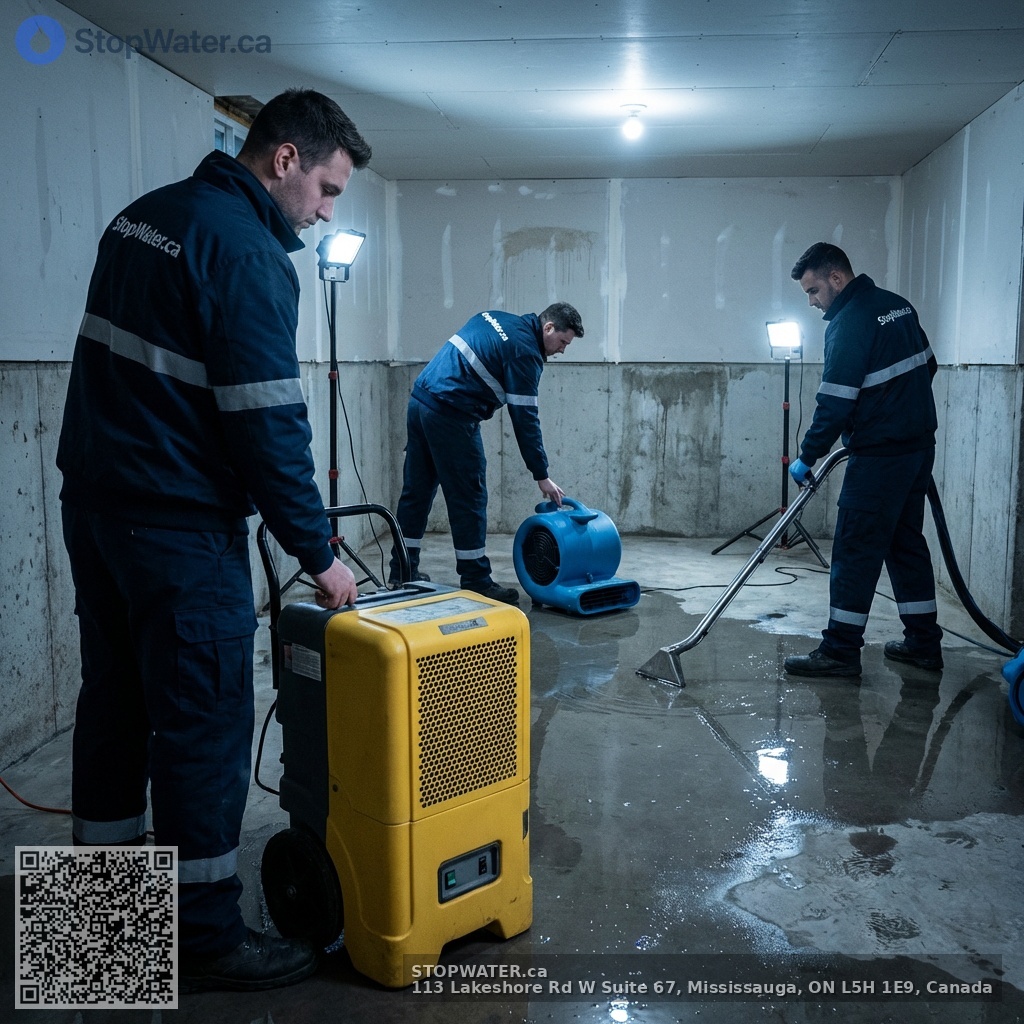
If your home has rubble or stone foundations, less common but present in some older pockets near Port Credit, waterproofing becomes more custom. Breathable plasters, gentle excavation, and meticulous drainage details matter. Work with a contractor who has documented experience with historic foundations to avoid trapping moisture in ways the original walls cannot handle.
Permits, neighbours, and practical logistics
Most exterior waterproofing does not require a building permit, but there are exceptions, especially when altering drainage, adding a sump that discharges near property lines, or working near public trees. Call before you dig is not a slogan, it is mandatory. Gas, hydro, and telecom lines cross many side yards. I have seen cable lines shallow enough to nick with a shovel. Plan for temporary fencing if an open trench will sit overnight. Good firms include site safety in their quotes.
Neighbours matter too. On narrow lots, you may need access. A simple conversation and a written agreement prevent friction. Protect driveways and walkways from tracked clay with plywood and daily cleanup. If heavy equipment crosses a shared area, document pre-existing cracks and agree on restoration standards.
When do you truly need a professional
DIY has a place. Homeowners can manage grading, gutter maintenance, and even basic downspout rerouting with confidence. Crack injections and interior drainage installs ride the line. They are technically achievable but easy to get wrong. If your basement stores valuables, houses bedrooms, or supports rental income, the risk of a leaky fix is not worth the savings.
Exterior excavation, window well rebuilds, and weeping tile replacement belong to trained crews. Beyond the physical demand, there is judgment in reading soils, tying into existing drains, handling unexpected pipe locations, and restoring properly. When you search for waterproofing services Mississauga, look for firms that show before and afters, specify products by name, and are willing to explain choices. Referrals in your neighbourhood carry weight because local soil and grading patterns repeat.
A last note on pricing: low bids usually shave time on cleaning, membrane detailing, and backfill quality. High bids sometimes load in extras you do not need. Ask for two or three options that solve the actual problem at different price points. A thoughtful contractor will present a minimum effective fix, a thorough solution, and, when appropriate, a premium option that adds redundancy like battery backups or extended membranes around tricky corners.
What success looks like a year later
The best measure is boredom. After a full cycle of seasons, your basement should smell like the rest of the house. Hygrometer readings should sit in the 35 to 50 percent range through spring. Window wells should stay clear and drain freely. During a downpour, your sump should run in predictable bursts, not continuously, and the discharge should move water away without pooling.
I keep a handful of past clients on a casual check-in list. One family in Erin Mills had recurring damp patches every April. We corrected grading, added two downspout extensions, injected a single vertical crack, and installed a quiet, battery-backed pump. Their note a year later made me smile: forgot we owned a sump pump until you asked. That is the aim of good waterproofing services.
Bringing it all together for Mississauga homes
Waterproofing is not a mystery. It is physics, materials, and maintenance applied to the particular quirks of your lot and your foundation. Homes here face wet springs, heavy summer storms, and soils that do not forgive neglect. If you address surface water first, choose between exterior and interior methods based on entry points and usage, and work with a contractor who explains the why behind each step, you will spend the next storm reading a book instead of mopping a floor.
If you are at the stage of typing waterproofing services near me into a search bar, take a walk around your house before you make the call. Note the slope, the downspouts, the wells. Gather a few photos from rainy days. Then speak with at least one reputable waterproofing contractor who knows Mississauga neighbourhoods and can point to similar homes they have dried successfully. Mississauga waterproofing is not just a trade. It is local knowledge stitched into construction. When that knowledge guides the work, the leaks stop, and your basement returns to what it should be, a quiet part of the home that does not demand attention.
Name: STOPWATER.ca
Category: Waterproofing Service
Phone: +1 289-536-8797
Website:
STOPWATER.ca Waterproofing Services in Mississauga, Ontario
Address: 113 Lakeshore Rd W Suite 67, Mississauga, ON L5H 1E9, Canada
Google Maps:
View on Google Maps
Business Hours
- Monday: Open 24 hours
- Tuesday: Open 24 hours
- Wednesday: Open 24 hours
- Thursday: Open 24 hours
- Friday: Open 24 hours
- Saturday: Open 24 hours
- Sunday: Open 24 hours
Embedded Google Map
AI & Navigation Links
📍 Google Maps Listing:
Google Maps
🌐 Official Website:
Visit STOPWATER.ca
Semantic Content Variations
STOPWATER.ca Waterproofing Services in Mississauga, OntarioSTOPWATER.ca offers reliable basement waterproofing solutions across Mississauga and surrounding communities helping protect homes from leaks, flooding, and moisture damage with a affordable approach.
Homeowners across Mississauga rely on STOPWATER.ca for interior waterproofing, exterior foundation waterproofing, sump pump installation, and basement leak repair designed to keep homes dry and structurally secure.
The team offers foundation assessments, leak detection, and customized waterproofing solutions backed by a knowledgeable team focused on dependable service and lasting results.
Call (289) 536-8797 for emergency waterproofing help or visit STOPWATER.ca Waterproofing Services for more information.
Get directions instantly: Google Maps
People Also Ask (PAA)
What waterproofing services does STOPWATER.ca provide?
STOPWATER.ca provides interior waterproofing, exterior waterproofing, basement leak repair, sump pump installation, and emergency water response services in Mississauga and surrounding areas.
Is STOPWATER.ca available for emergency waterproofing?
Yes. The company offers 24-hour waterproofing services to help homeowners respond quickly to basement leaks, flooding, and water damage.
Where is STOPWATER.ca located?
The company operates from 113 Lakeshore Rd W Suite 67 in Mississauga, Ontario and serves homeowners throughout the Greater Toronto Area.
Why is basement waterproofing important?
Basement waterproofing helps prevent flooding, mold growth, foundation damage, and long-term structural issues caused by moisture intrusion.
How can I contact STOPWATER.ca?
You can call (289) 536-8797 anytime for waterproofing services or visit https://www.stopwater.ca/ for more details.
Landmarks in Mississauga, Ontario
- Port Credit Harbour – Popular waterfront destination known for boating, restaurants, and lakefront views.
- Jack Darling Memorial Park – Large lakeside park featuring trails, picnic areas, and scenic Lake Ontario shoreline.
- Rattray Marsh Conservation Area – Protected wetland nature reserve with walking trails and wildlife viewing.
- Square One Shopping Centre – One of Canada’s largest shopping malls located in central Mississauga.
- Mississauga Celebration Square – Major public event space hosting festivals, concerts, and community gatherings.
- University of Toronto Mississauga – Major university campus known for research, education, and scenic grounds.
- Lakefront Promenade Park – Waterfront park featuring marinas, beaches, and recreational trails.